
Essential Hand Tools for a Better Workshop
Project Guide · Tools
Essential Hand Tools for a Better Workshop
A useful workshop does not need to be filled with every tool available. A carefully selected group of versatile hand tools can handle a wide range of measuring, fastening, adjusting, cutting, and repair tasks. Building a practical toolkit around frequently used essentials can make everyday projects more organized and efficient.
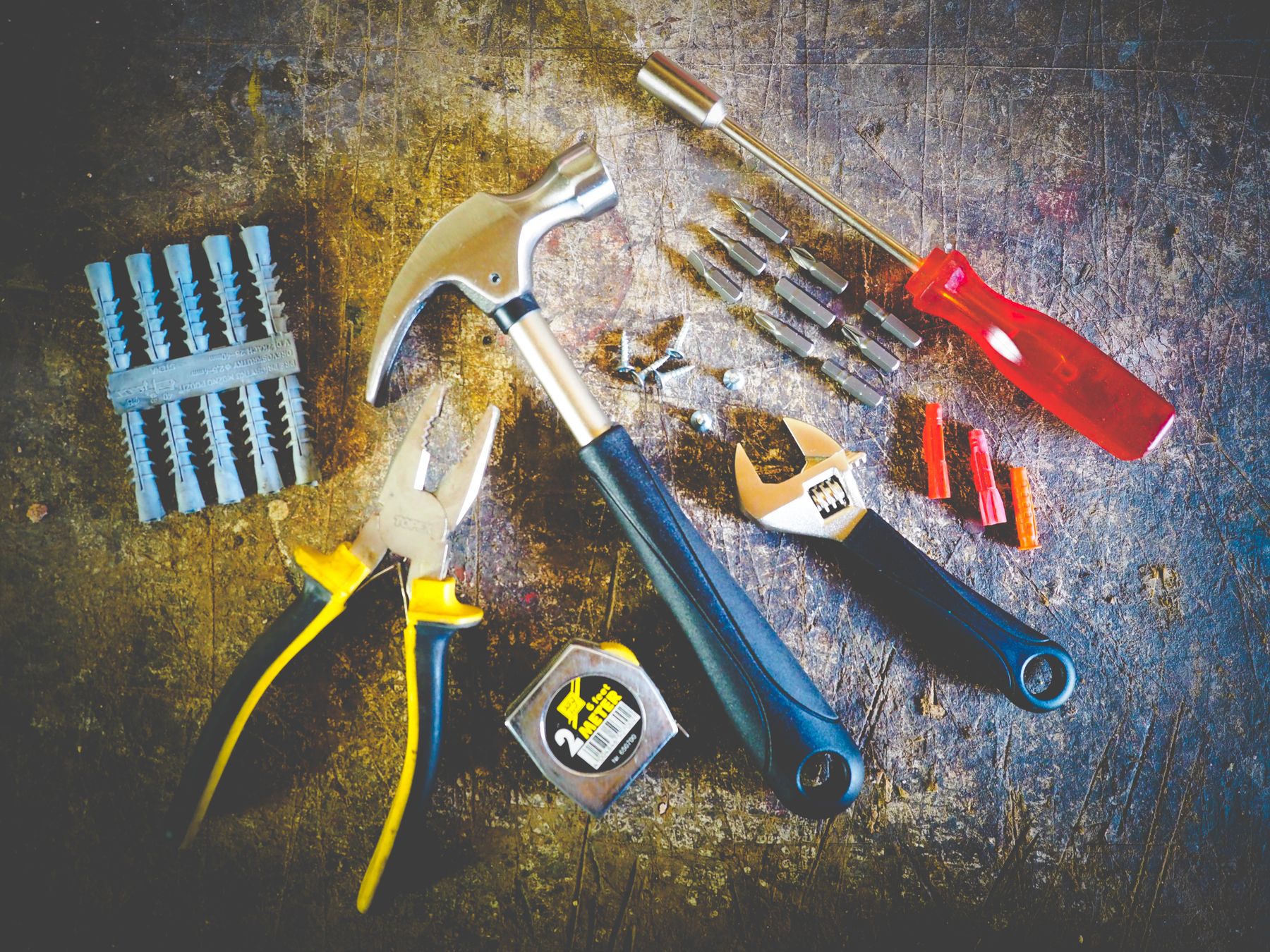
A practical toolkit is built around the work you actually do. Start with versatile essentials, keep frequently used tools within reach, and add specialized equipment only when a project creates a genuine need.
Workshop Essentials
Build the Core of Your Toolkit
01 · Driving
Screwdrivers and Driver Tools
Screwdrivers are among the most frequently used workshop tools. A selection of common tip sizes helps with furniture assembly, household hardware, fixtures, brackets, and general maintenance.
Using the correct driver size is important. A poorly matched tool can slip during use or damage the screw head.
A compact multi-bit driver can also be useful when storage space is limited or when a project involves several different fastener types.
02 · Adjusting
Wrenches and Spanners
Wrenches are useful for tightening and loosening nuts, bolts, fittings, and mechanical connections.
Combination wrenches provide convenient access to common fastener sizes, while adjustable wrenches can be useful for occasional jobs involving different dimensions.
Keeping commonly used sizes within easy reach can make assembly and maintenance work much faster.
03 · Gripping
Pliers and Gripping Tools
Pliers are valuable for gripping, bending, holding, twisting, and manipulating small components.
General-purpose pliers work well for many everyday tasks, while long-nose designs are useful in tighter spaces. Cutting pliers can help with wire, small fasteners, and other materials suited to the tool.
Different gripping tools serve different purposes, so a small variety can add considerable flexibility to a workshop.
04 · Striking
Hammers and Striking Tools
A dependable hammer is useful for fastening, assembly, light demolition, adjustment, and repair work.
Claw hammers are versatile for driving and removing nails, while other striking tools may be better suited to specific materials or tasks.
Choose a hammer that feels balanced and comfortable in the hand, especially for longer projects.
05 · Measuring
Measuring Tools
Accurate measurements help reduce mistakes before cutting, drilling, or fastening.
A tape measure is one of the most useful additions to any toolkit. A level helps check horizontal and vertical alignment, while squares and marking tools can assist with layout work.
Taking time to measure before making permanent changes often makes the rest of the project easier.
06 · Cutting
Cutting Tools
Utility knives, hand saws, snips, and other manual cutting tools can handle a wide range of workshop materials.
Always choose a tool that matches the material being cut and keep cutting edges in suitable condition.
A controlled, appropriate cutting tool is usually easier to work with than forcing the wrong tool through the material.
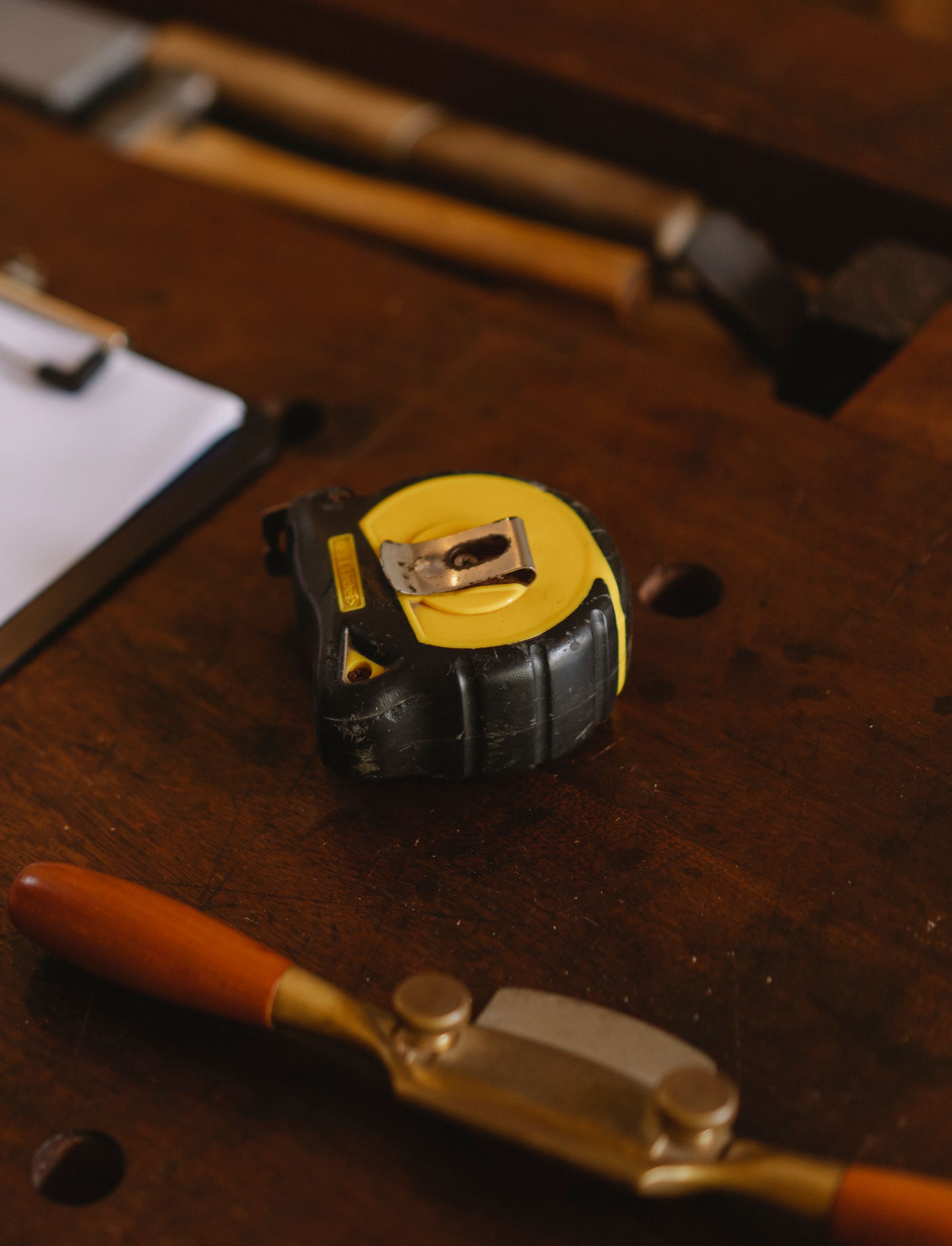
Measure First
Accuracy Makes the Rest of the Project Easier
Measuring tools are not only for large construction work. A tape measure, level, square, and marking tool can make everyday assembly, mounting, cutting, and repair tasks easier to plan.
Check dimensions and alignment before drilling, fastening, or making a permanent cut. A few extra moments of preparation can help keep the project organized and reduce unnecessary rework.
Workshop Organization
Good Tools Are Easier to Use When They Are Easy to Find
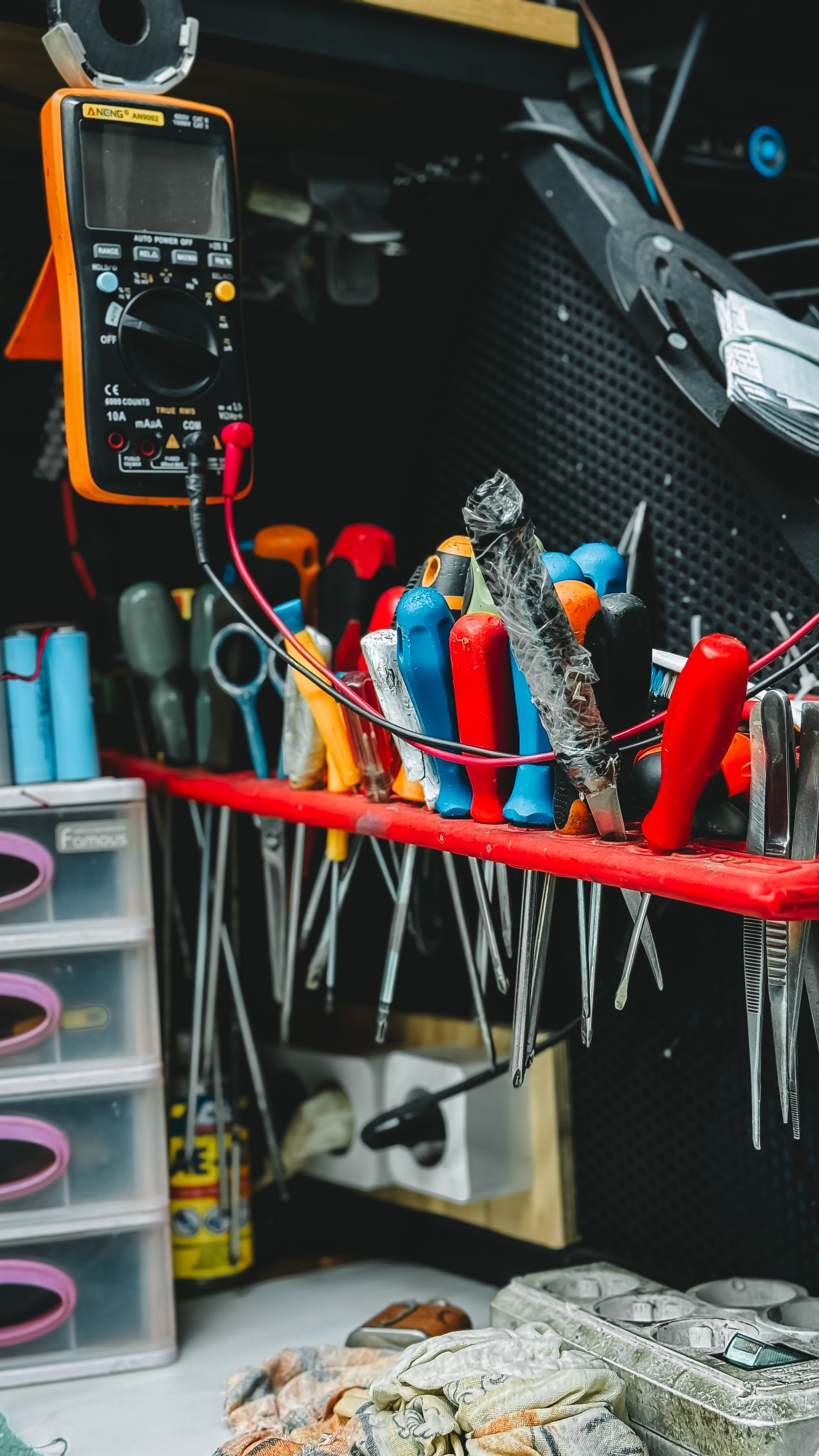
Tool bags, boxes, drawers, wall storage, and small-part organizers can help keep frequently used equipment in predictable locations. Separating measuring, fastening, cutting, and gripping tools can make a workspace feel more efficient.
The best toolkit is not necessarily the largest one. Start with tools that match the repairs, maintenance, and DIY projects you perform most often.
Over time, add specialized tools when a specific project creates a genuine need for them. This approach keeps the workshop practical without creating unnecessary clutter.
Final Thoughts
A Better Workshop Starts With Versatile Essentials
A strong workshop foundation comes from versatile tools that cover the basics well. Screwdrivers, wrenches, pliers, hammers, measuring tools, and cutting tools can support a wide variety of everyday projects.
With thoughtful organization and the right selection of essentials, a workshop can stay ready for repairs, adjustments, assembly, and general maintenance.
Workshop Principle
Choose useful tools. Keep them organized. Add more when the work requires it.Build Your Workshop