
Choosing Fasteners for Reliable Home Repairs
Project Guide · Hardware
Choosing Fasteners for Reliable Home Repairs
Fasteners may be small, but they play a major role in the strength, stability, and appearance of a repair project. Whether you are mounting a shelf, fixing loose hardware, assembling furniture, or completing a basic household repair, choosing the right type of fastener helps the job come together more smoothly.

A reliable repair starts by matching the fastener to the material, connection type, size, head style and installation method required by the project.
Selection Basics
Start With The Connection
01 · Material
Start With the Material
The first step is identifying what you are fastening into. Wood, drywall, masonry, metal, and other materials require different fastening approaches.
Wood screws are commonly used when joining timber or attaching hardware to wooden surfaces. For drywall, anchors can provide additional support when a screw cannot be driven directly into a wall stud. Masonry projects often require fasteners designed for brick, concrete, or block.
Matching the fastener to the base material helps create a more secure connection and reduces the chance of damaging the surface.
02 · Fastener Type
Choose the Right Fastener Type
Different fasteners are designed for different jobs.
Screws provide a removable connection and are useful for many repair and assembly projects. Nails are often practical for quick fastening, trim work, and woodworking. Anchors help support screws in hollow or less supportive wall materials. Bolts, nuts, and washers are useful when a stronger mechanical connection is needed.
Before starting a project, consider whether the connection needs to be permanent, removable, load-supporting, or easy to adjust later.
Project Preparation
Size and Head Style Matter
Fastener length and diameter matter. A fastener that is too short may not provide enough engagement, while one that is unnecessarily long can pass through the material or interfere with nearby surfaces.
Select a length that provides enough hold without creating unnecessary penetration. For projects involving multiple layers, consider the combined thickness of the materials being joined.
Installation Details
Build a Better Fastening Setup
03 · Size
Pay Attention to Size
Fastener length and diameter matter. A fastener that is too short may not provide enough engagement, while one that is unnecessarily long can pass through the material or interfere with nearby surfaces.
Select a length that provides enough hold without creating unnecessary penetration. For projects involving multiple layers, consider the combined thickness of the materials being joined.
04 · Head Style
Consider the Head Style
Fastener heads affect both installation and finished appearance. Countersunk screws can sit more closely to the surface, while wider heads may provide additional contact area.
The drive style also matters. Phillips, slotted, hex, Torx-style, and other drive types require compatible tools. Using the correct driver helps reduce slipping and makes installation easier.
05 · Anchors
Use Anchors Where Needed
When mounting items to drywall or other hollow surfaces, a screw alone may not provide the support required. Wall anchors create a more secure attachment point by spreading the load across a larger area.
Different anchor designs suit different applications, so always select one appropriate for the wall material and the specific project.
06 · Organization
Keep Fasteners Organized
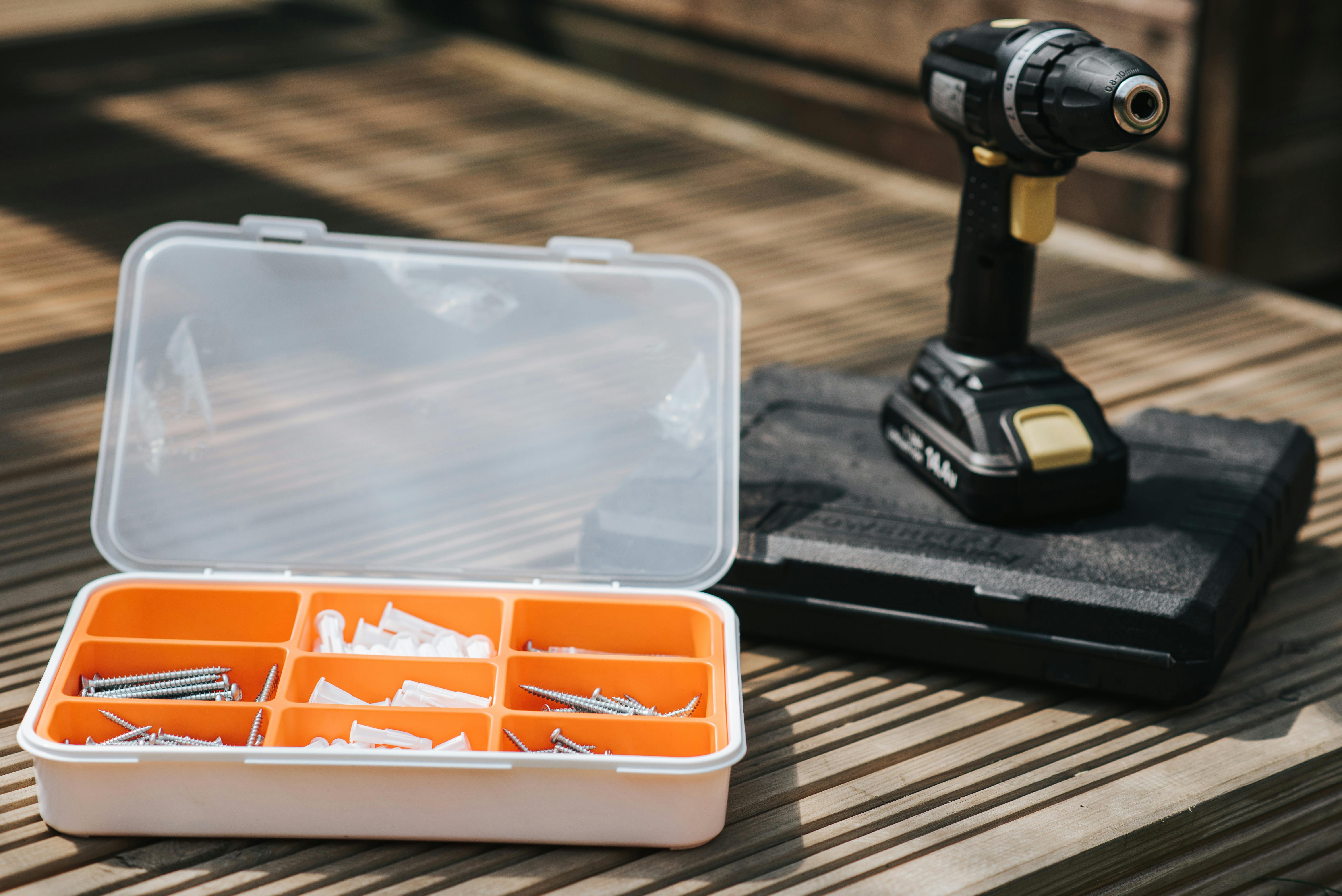
A well-organized fastener collection saves time during repairs. Small compartment organizers make it easier to separate screws, nails, anchors, washers, and other hardware by type and size.
Labeling frequently used fasteners can also make future projects faster and reduce the chance of selecting the wrong piece.
Final Thoughts
Reliable Repairs Start With the Right Connection
Reliable repairs start with the right connection. By matching fasteners to the material, selecting an appropriate type and size, and using the correct installation tools, everyday repair work becomes easier to plan and more consistent.
A practical selection of screws, nails, anchors, bolts, and related hardware can make a workshop more prepared for both quick fixes and larger home improvement projects.

Ready for the Next Project?